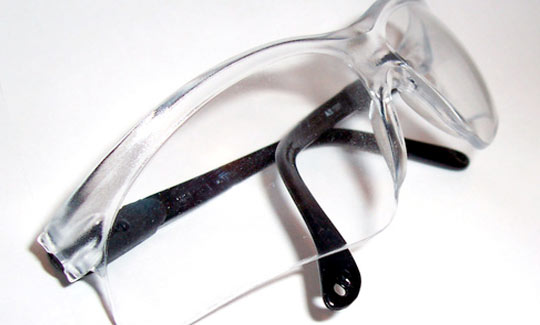
Avoiding Eye Injuries in the Workplace

The United States Bureau of Labor Statistics has stated that more than 20 thousand workplace eye injuries occur each year. In additional, the Occupational Safety and Health Administration (OSHA) has stated that workplace eye injuries cost approximately $300 million a year in regards to lost productivity, workers’ compensation, and medical treatment. Such injuries can range from an insignificant eye strain to intense trauma that can cause permanent damage or blindness.

One of the primary ways of preventing loss of vision is to always use the appropriate eyewear when performing your tasks. This is especially true for those who are involved in welding, due to its high-risk factor when it comes to eye injuries.

Some of the most common causes of eye injuries include:

  • Tools
  • Particles
  • Chemicals
  • Flying objects (like bits of glass or metal)

Effective ways to protect your eyes

Understand and appreciate the safety dangers of your profession. This involves clearing potential hazards before beginning a task. You can use work screens or different types of engineering controls when doing so.

If your profession involves the handling of hazardous materials, it is important that you wear special safety goggles, face shields, safety glasses, or helmets designed for that task.

Remember to wear eye safety items that are OSHA-compliant and have been approved by the American National Standards Institute (ANSI).

If you sustain an eye injury in the workplace, visit an ophthalmologist or take a trip to the emergency room immediately, regardless of whether the incident seems minute. Delayed medical attention can lead to blindness, long-term damage or a temporary loss of vision.

What are the Responsibilities of a Medical Review Officer?

A Medical Review Officer (MRO) plays a pivotal role in helping employers ensure a safe workplace. An MRO is a licensed physician who reviews non-negative drug tests, determines if the presence of a tested substance is the result of legal usage and reports results directly to employers. An MRO may serve as an expert witness in contested cases as well. In addition, MRO’s provide expert guidance and training to collectors and often deliver Reasonable Suspicion Training for Supervisors to employers, a program MOH sponsors several times each year. MRO’s may also manage federal random drug testing consortiums to meet requirements established by Federal Motor Carriers, Pipeline, FAA, Federal Railroad, US Coast Guard, Federal Transportation agencies and others.

Medical Review Officer Services

MN Occupational Health provides both non-regulated MRO services (with Dr. Vijay Eyunni) and federally regulated MRO services including random testing programs through Advanced Drug Testing.

Who Benefits from OCC Med?

Today’s employers are charged with managing risk and related expenses while still fulfilling their commitments to their customers and employees. A growing number of employers realize the advantages of partnering with occupational medicine clinics. Minnesota Occupational Health provides the complete range of urgent care services including imaging, suturing, eye and burn care as well as a referral source to specialty care such as advanced imaging, physical therapy and surgery.

The following are some of the major benefits of OCC Med clinics to both employees and employers:

If you happen to be involved in an accident at the workplace, it could lead to acute pain and anxiety. In such a scenario, you should seek immediate medical attention. Minnesota Occupational Health’s clinics provide crucial services that are designed to handle and treat work related injuries using an ideal approach. MOH Providers also determine and communicate a plan with the best course of action in terms of your treatment in order to return an injured worker to good health as soon as possible.

Another major benefit of partnering with Minnesota Occupational Health is our ability to create and report the proper documentation to insurers, QRC’s and employers including periodic work status reports so every stakeholder, from the patient to the insurer understands the needs and accommodations that may be required until Maximim Medical Improvement (MMI) is attained.

The Role of Occupational Health + Safety

The terms occupational health and environmental medicine describe MN Occupational Health’s commitment to the health of workers through clinical care, prevention, disability management, research and education. For those within a work setting, these terms also aim to benefit the well-being, protection and overall daily work routines of both individuals and their employers. One of the goals of occupational health and environmental medicine is to identify and reduce or eliminate workplace hazards, whether physical or environmental.

A healthy workforce is critical to employers but in the end it is everyone’s goal that any given worker leaves their shift each day and retires at some point in the future without incurring long-term injury or illness.

If you would like to know more about the occupational health and environmental medicine practices of MOH, do not hesitate to contact us by calling 651-968-5300. Based in the Twin Cities, we provide professional occupational health & medicine services in Minnesota.

Ergonomics

The goal of ergonomics is to create an environment in which workers interact safely and efficiently with equipment, machinery and work place surroundings. A poor worksite design will ultimately lead to tired, fatigued and frustrated workers, while a well-organized design results in better workplace dynamics, safe employees, and higher output. Ergonomics involves creating a work environment with the human factor being considered.

What are the benefits of ergonomics?

Ergonomics establishes a culture of safety. By implementing proven workplace ergonomics, a company can demonstrate that it is committed to promoting employee safety.

Ergonomics enhances productivity. When a company puts in place a plan to promote workplace ergonomic solutions, employees benefit by working in a job that provides opportunity for good posture and proper body mechanics, less work exertion, good reaching heights and less motion, thereby creating a more efficient and safe workstation.

Ergonomics minimizes expenditure. When employers and employees actively invest in creating ideal ergonomic factors, it minimizes risk and reduces costs associated with work-related musculoskeletal disorders (WMSDs) and/or cumulative trauma disorders (CTD’s). Ergonomic injuries or repetitive stress injuries tend to develop over the long-term and can cost thousands of dollars in treatment, all of which can be minimized or avoided by implementing safe, proven ergonomics. 

Ergonomics improves the quality of work. When operating in a safe, optimized environment workers can produce higher quality work based solely on their ability to take full advantage of their skills and talents without the fear of injury.

Ergonomics enhances employee engagement. Ergonomics enable companies to generate positive employee engagement. This in turn, boosts morale and minimizes turnover.

Minnesota Occupational Health offers services including workplace, work-station and job-task analyses. Occupational Therapists work with employers and insurers to minimize cumulative trauma disorders (CTDs) and to guide workers and employers on how to adapt workers and their environment.

What is Spirometry?

A spirometry test is a lung function or Pulmonary Function Test (PFT) that may be ordered when clearing an individual to wear a respirator for work.

The Importance of Respirators

Several industries mandate that workers wear a respirator while other employers make respirators available in certain circumstances, even if not required. Respirators can range from a standard dust mask, half or full-face filter mask all the way to an entirely enclosed Self Contained Breathing Apparatus (SCBA), such as those worn by firefighters and people who work in confined spaces. Medical requirements to meet OSHA standards are determined by the reason for respirator use, the type of respirator, the duration and frequency that a respirator is worn and the age and respiratory health of a worker.

Whether your respirator protection program is an OSHA requirement or a voluntary offering, forming an effective respiratory surveillance program helps to keep your employees protected, reducing potential medical expenses and lost time.

The Spirometry Test

During a test, the patient is asked to take a deep breath and then secure his or her lips around the spirometer. Once the spirometer is in place, the patient breathes out as quickly and with as much force as possible, maintaining the exhale as long as possible. The device determines if the test is valid. Three valid tests are captured and compared. Measurements on the spirometer are read by a medical provider who determines if a worker can wear a respirator on anywhere from a daily to emergency-only basis. The frequency of retesting is determined by the medical provider based upon respirator types, how often and for how long respirators are worn, and the respiratory health of a worker.

MN Occupational Health performs spirometry tests – or pulmonary function tests – on behalf of employers in the Twin Cities. Contact us online or by calling 651-968-5740 to learn more.


Pre-Hire Human Performance Evaluation (HPE) aka Post-Offer Employment Testing (POET) or Work Simulation

Employers with positions that require specific physical abilities will often create a functional job description in addition to required duties, responsibilities, and the education, skill level, and experience that would enable a person to perform the job successfully. A person offered a job contingent upon things like passing a drug test or a physical exam may also be required to demonstrate an ability to execute the essential physical demands of the position. Pre-hire HPE’s/POET’s/Work Simulations can help identify pre-existing conditions that would prevent a candidate from performing the job without accommodation.

How Does a HPE/POET/Work Simulation Work?

Job Task Analysis

In order to accurately assess the essential functional demands required of a job, an employer along with MOH will observe, measure and document the required tasks, equipment and environment the worker functions within. In determining the physical requirements for the job, detailed weights, distances, static postures and awkward positions, tools, etc., will be assessed and later incorporated into the Job Task Analysis and the HPE/POET/Work Sim.

Determining the Exact Requirements

If the job requires lifting material in a warehouse, it is important to find out exactly how much weight one would be expected to move and both the starting and ending heights and distances. This can be done with scales or other measuring devices. Understanding a suitable weight limit will ensure you do not exclude any qualified applicants. By setting an arbitrary weight limit that is much higher than generally required, you may lose potential workers who are perfectly capable of performing the job. Try to estimate the amount of time an employee will be performing physical activities like bending, standing, sitting, and lifting; and whether they will need stamina and balance for tasks like climbing ladders, working in a confined space, or being exposed to extreme weather.

Avoid Discrimination

Employers have a right but not a requirement to accommodate a candidate who has some limitations.  For example, to find an experienced construction worker who does not have certain limitations can be difficult in certain specialties, but if a candidate’s skill-sets offset their ability to lift x pounds to shoulder level, the employer can still choose to hire the individual.

Before conducting a HPE/POET/Work Simulation, make sure the potential employee has been offered the job contingent upon medical evaluation, drug testing, etc. Administering a human performance evaluation prior to offering employment or only to some people applying for the same job will likely be seen as discriminatory.

Related Information:

Silica Exposure Standard Frequently Asked Questions (FAQ)

Background and Health Impacts

What is crystalline silica?

Crystalline silica is a mineral used for many industrial applications and products. It is widely used at construction sites. It is used to make materials such as sand, stone, concrete and mortar, which in turn are used to produce products like glass and ceramic. Silica exposure occurs from industrial operations like foundry work or fracking.

How can exposure impact your workers’ health?

Crystalline silica is linked to several diseases. These include silicosis (an incurable lung disease), kidney disease, chronic obstructive pulmonary disorder (COPD) and lung cancer. Inhaling even a small amount of crystalline silica particles drastically increases the risk of developing serious health issues.

Who is at risk from exposure?

About 2.3 million workers are exposed to crystalline silica while on the job. Just being around sand, or other silica-laced materials however, is not dangerous. Inhalation occurs with specific job applications that release breathable dust into the air. These “respirable” crystalline silica particles are 100x smaller than than ordinary grains of sand found on playgrounds or beaches and are made from high-energy applications like sawing, cutting, grinding, crushing, or drilling on substrates like stone, concrete, mortar, or brick.

What is the connection between crystalline silica and lung cancer?

Scientific data has linked crystalline silica and lung cancer. Both the World Health Organization (WHO) and the National Institute of Health’s (NIH) Toxicology Program have classified crystalline silica as a ‘known human carcinogen’. OSHA has reviewed more than 50 studies providing evidence of this link. It has found evidence between the two in at least ten different industries, prompting the American Cancer Society (ACS) to use the same classification as WHO and NIH.

How will the new rule protect workers’ health?

Employers are now required to utilize engineering controls like ventilation and wet methods for sawing and/or cutting crystalline silica-containing materials. OSHA expects these measures to prevent up to 600 deaths per year from silica-related diseases like lung cancer, silicosis and kidney disease. The measures are meant to prevent more than 900 new cases of silicosis every year.

Why is a new crystalline silica rule being issued?

The current permissible exposure limit (PELs) for crystalline silica was established 45 years ago and has not been updated to reflect recent scientific research regarding exposure to crystalline silica and diseases like lung cancer and silicosis. Crystalline silica is classified as a ‘human carcinogen’ by groups like the National Institute for Occupational Safety and Health (NIOSH), the U.S. National Toxicology Program and the International Agency for Research on Cancer. Previous PELs were measured with methods that are no longer in use and that failed to measure the true impact of crystalline silica on workers’ health.

With evidence of a decline in silicosis cases in the United States, is this new rule necessary for preventing industrial exposure to crystalline silica?

More workers in 2014 died from silicosis than from fires or industrial accidents like structural or trench collapses. Most deaths from silicosis are never diagnosed or even reported and those numbers reported between 2005 and 2014 do not include deaths from silica-related ailments like lung disease, kidney disease or COPD. This has prompted lawmakers to take action by implementing this new rule across industries, including newer industries like hydraulic fracking.

What is the new permissible exposure limit (PEL)?

The new PEL limits worker exposure to breathable crystalline silica to 50micrograms/cubic meter of air (μg/m3) over a span of eight hours. OSHA determined the new PEL of 50 μg/m3 was enough to significantly reduce the risk of developing crystalline silica-related diseases in workplace environments, although the American Conference of Governmental Industrial Hygienists recommends a lower exposure limit of 25 μg/m3 over an eight-hour day.

Impact on Industry

A number of major industries will be affected by this new change. These include, but are not limited to:

  • Construction
  • Ready-Mix Concrete
  • Glass Manufacturing
  • Concrete products
  • Stone products
  • Pottery products
  • Abrasive blasting for general industry, construction and maritime work
  • Structural clay products
  • Foundries
  • Dental laboratories
  • Refractory furnace installation/repair
  • Paintings/coatings
  • Jewelry production
  • Railroads
  • Hydraulic fracturing for gas/oil
  • Landscaping
  • Asphalt products manufacturing

How many workplaces will be affected?

There are approximately 676,000 workplaces in general industry, construction and maritime applications that will be affected by the new rule.

How many workers will be impacted?

An estimated 2.3 million workers are exposed to breathable crystalline silica every year. About 2 million of those cases are within the construction industry. At least a million of these exposure cases are expected to be resolved with the new mandates.

What will be the economic impact?

The total annual cost of implementing the new rule is $1 billion. The rule is expected to provide an average annual net benefit of $3.8 million over the next 60 years. This should result in annual costs of roughly $1,524 for the average workplace. However, OSHA’s research indicates that the economic impact on small businesses will be minor, with only a $560 average for businesses with less than 20 employees.

Why does the total compliance cost appear to be so high?

OSHA’s standards for general industry and construction are extremely broad. As many as 2.3 million workers and 676,000 establishments maybe affected. According to a recent economic analysis conducted by OSHA, the new rule will not have a substantial economic impact on large firms. Instead, the aggregate costs will be sufficiently offset by benefits like reduced costs associated with treating and preventing silica-related deaths or illnesses.

How will jobs be impacted?

Inforum, a renowned macroeconomics modeling firm based at the University of Maryland, recently conducted a study that showed the new rule will have a negligible, yet positive net effect on the overall employment rate in the United States.

How have small businesses been included in the new rule?

A Small Business Advocacy Review Panel was convened before the silica rule was proposed. Following the proposal, small business owners and members of the general public were given the chance to voice concerns about writing the new rule. Suggestions were submitted by testimony at a public hearing, written comments and submission of data and briefs following the hearing. OSHA then utilized all of the information to decide upon the final rule and began evaluating its impact on small businesses.

Rule Requirements

How can silica exposure be controlled in order to abide by the PEL?

Engineering controls such as ventilation must be used by employers to keep exposure to breathable crystalline silica at, or below the PEL. Wetting down surface dust before sweeping, or using the water flow rate the manufacturer recommends for a tool with water control features are other effective ways to minimize the risk of exposure to crystalline silica. Process isolation has been known to work well. Respirators are effective but they are only allowed when workplace and engineering practice controls cannot keep exposure levels at or below the PEL.

Why can’t workers just wear respirators at all times?

Respirators are neither practical or effective in providing enough protection against breathable crystalline silica. Unless they are individually fitted and regularly maintained for each worker, there will still be a much higher risk of exposure compared with facilities utilizing vents or other control methods. Respirators are less reliable simply because it is up to the individual workers to ensure their devices are being properly fitted and maintained and are worn consistently and correctly, despite the potential for discomfort, particularly in hot weather.

Are air sampling methods used to detect and measure silica reliable?

Yes and to improve on the reliability of these measurements, employers must have their silica samples analyzed by qualified laboratories that utilize methods specified in Appendix A of the standard. These methods that have been published by OSHA, NIOSH and MSHA are incredibly precise.

Why must construction employers implement engineering and work practice controls a year before laboratories are required to meet specifications for air sample analysis?

Construction companies will not be required to conduct regular assessments for exposure. Those that do not use specific guidelines will, however, have sufficient measurements available from the one of the 40 laboratories in the United States.

What is the purpose of medical surveillance?

Identify negative health effects that are linked with crystalline silica exposure.
Determine if any employees are suffering from conditions including lung disease that may make them more sensitive to breathable crystalline silica exposure.
Determine the employee’s unique fit for a respirator.

Why are medical surveillance results given only to the workers and not their employers?

Employers are not provided with such information, a) because of patient confidentiality and b) because they are supposed to provide protection for employees based on silica exposure levels and how well the current controls are working. Employee physicians or licensed health care professionals instead provide recommendations to the employer based on the health of the patient(s).

Compliance Dates

When must employers comply with the standard for general industry and
maritime?

Aside from hydraulic fracturing operations in the gas and oil industry, employers must:

  • Comply with all obligations of the standard (excluding the action level trigger for medical surveillance) by June 23, 2018.
  • Offer medical exams for employees exposed at or above PEL for 30 days or more a year by June 23, 2018.
  • Offer medical exams to employees exposed at or above the action level for 30 days or more a year beginning on June 23, 2018.

For hydraulic fracturing operations in oil and gas, employers must:

  • Comply with all obligations of the standard, except for engineering controls and the action level trigger for medical surveillance, by June 23, 2018.
  • Comply with requirements for engineering controls to limit exposures to the new PEL by June 23, 2021; employers can continue to have employees wear respirators if their exposures exceed the PEL between June 23, 2018 through June 23, 2021.
  • Offer medical examinations to employees exposed above the PEL for 30 or more days beginning on June 23, 2018.
  • Offer medical examinations to employees exposed at or above the action level for 30 or more days a year beginning on June 23, 2020.

Why is there a difference in these compliance dates?

The new rule allows hydraulic fracturing employers additional time to have these changes implemented and to take advantage of emerging technologies because the controls for breathable crystalline silica in this industry are still in development. These employers do not have to implement engineering controls until June 2021. Hydraulic fracturing employers may continue to provide individual respirators for their employees between June 2018 and June 2021 when exposures exceed the PEL.

When must employers comply with the construction standard?

Employers must comply with all of the obligations of the standard by June 23, 2017, with the exception of methods of sample analysis, which must be in compliance by June 23, 2018.

State Plans and Compliance Assistance

Will states with OSHA-approved programs adopt the standard?

States with OSHA-approved state plans will have six months to adopt and comply with the standards that are as effective as Federal OSHA standards. Some state plans may have more stringent requirements.

What resources are available for small businesses and other employers to help them comply with the standards?

OSHA offers extensive compliance assistance with Compliance Assistance Specialists, as well as on its website, in publications, webinars and through training programs. Many of these are designed to help small- to mid-sized employers. OSHA will develop a Small Entity Compliance Guide for crystalline silica to provide more information and assistance with the process.

Tips for Staying Safe at Work in the Summer

Minnesota’s summer brings with it a myriad of work-related health risks including sun exposure, heat, and even Lyme disease. As an employer, you should be made aware of the potential dangers that this season presents to your employees. Measures should be put in place to protect both you and the people who occupy your workplace.

How to cope with ultraviolet (UV) radiation

Overexposure to the sun has been linked to premature aging of the skin, cataracts, and skin cancer. Workers who spend hours outside exposed to the sun may develop skin irritation or worse. To cope with this, it is recommended that your workers take the following preventative measures:

  • Wear clothes that cover most of the body to minimize the amount of harmful rays penetrating the skin.
  • Wear a brim hat to cover the face and neck.
  • If possible, wear UV-absorbent sunglasses.
  • Apply sunscreen to areas of skin that experienced sun exposure.
  • Minimize sun exposure to only a few hours. Bear in mind the most harmful rays appear between 10am and 4pm.

How to cope with excess heat

Individuals who work in a kitchen or outdoors may have a difficult time adjusting to the heat. Following these tips will help your employees feel more comfortable:

  • Stay hydrated. Drink plenty of fluids.
  • When it gets too hot, take a break in a cool shade.
  • Wear light, loose fitting clothes to allow the body to cool.
  • Avoid alcohol, caffeine, and minimize sugar intake.
  • Eat smaller meal portions, especially before grueling labor.
  • When wearing work suits or respirators, avoid working directly under the sun if possible.

How to cope with ticks

Staff working outdoors risk receiving tick bites and catching Lyme disease. If you work outdoors (especially near wildlife), how can you avoid tick bites?

  • Use a strong repellent on clothing and wear long pants, long sleeves and socks.
  • When working outdoors, avoid bushy areas or moist and humid environments.
  • Perform a physical check after spending time in a tick-infested environment.
  • Shower immediately when you get to the house. Take precautions to ensure you do not take any ticks into your home.